
Home / Foundation Problem Signs
Homeowner guide
Signs Your Pflugerville Home Has Foundation Problems
Cracked drywall, a door that suddenly sticks, a gap behind the baseboard — on Blackland Prairie clay, these are rarely random. Here is what nine common signs actually mean.
Why these signs show up here
Pflugerville sits on soil that moves.
Most of Pflugerville is built on Blackland Prairie clay, a soil with a high plasticity index that swells when it takes on moisture and shrinks noticeably when it dries out. In a normal year that cycle is gradual enough that a house barely notices it. In a drought year — 2011, 2022, and 2023 were all sharp ones for Central Texas — the soil under a slab or a pier-and-beam foundation can shrink unevenly, and the structure above it moves to match.
That movement is what produces the signs below. None of them, on their own, means a house is in trouble — small cracks and the occasional sticking door happen in houses on stable soil too. What matters is whether several of these show up together, whether they are getting worse, and whether they line up on the same side or corner of the house.
Nine signs worth paying attention to
Diagonal cracks in interior drywall
A drywall crack that runs on a diagonal — usually starting at the top corner of a door or window and angling toward the ceiling — follows the stress line created when the framing above shifts unevenly. A straight vertical hairline at a taped seam is normal drywall shrinkage. A diagonal crack radiating from a corner is the framing telling you the slab underneath it is no longer level.
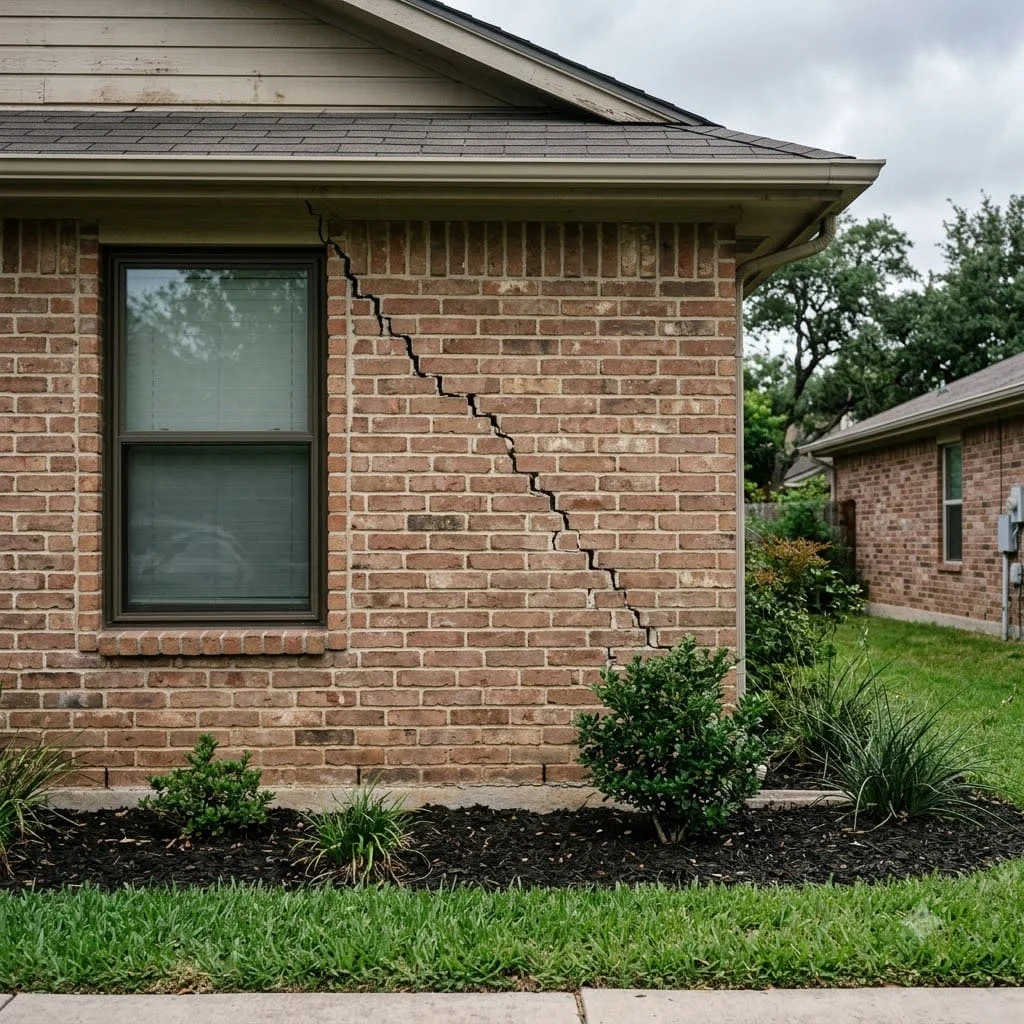
Cracks in exterior brick veneer or mortar joints
Brick does not flex the way drywall does, so it shows movement in a stair-step pattern along the mortar joints instead of a single clean line. These cracks tend to open widest near a corner of the house or above a garage door opening, which is usually where the slab has settled or heaved the most relative to the rest of the foundation.
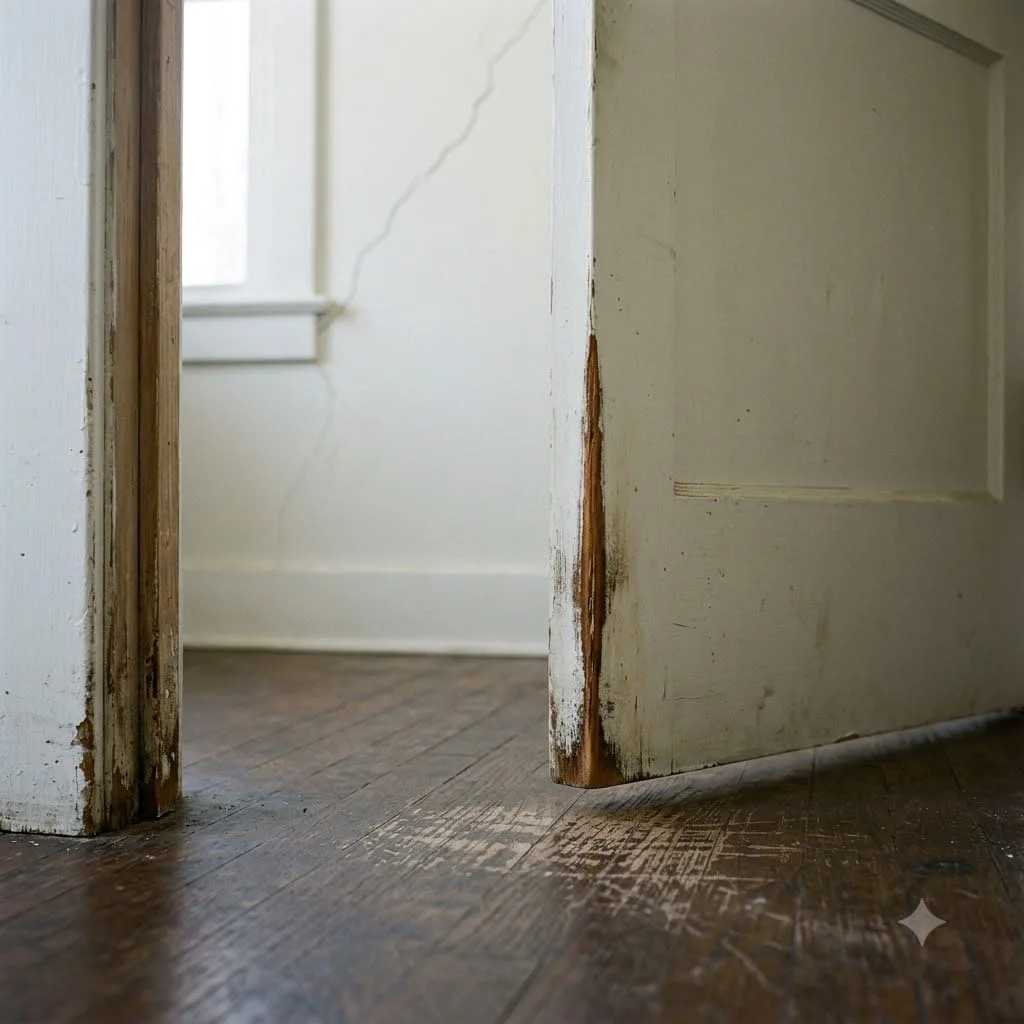
A door that suddenly starts sticking or won’t latch
Humidity makes wood doors swell and stick a little every summer, and that resolves on its own by fall. A foundation-related sticking door does not resolve — the frame has racked out of square because one side of the slab beneath it dropped or lifted, so the door drags along the same edge year-round and the latch no longer lines up with the strike plate.
Sloping or noticeably uneven floors
Set a marble or a ball on the floor near an exterior wall and see if it rolls toward the same spot every time. A consistent roll toward one corner or one wall is a sign of differential settlement — the slab or pier-and-beam structure has dropped more in that area than the rest of the house. Tile grout lines cracking in a pattern that follows the slope is a common companion sign.
Gaps opening around window and door frames
As framing racks out of square, the trim around windows and doors pulls away from the wall or the frame itself, leaving a visible gap that was not there before. Outside, the same movement often shows up as a cracked caulk line at the corner of a window where it meets the siding or brick.
A leaning or separating chimney
Masonry chimneys usually sit on their own footing, separate from the rest of the foundation. When the soil beneath that footing moves independently of the soil under the house — which happens often on Blackland Prairie clay because the chimney footing is smaller and reacts faster to moisture change — a gap opens where the chimney meets the exterior wall, or the chimney itself begins to lean.
Nail pops and hairline paint cracks along the ceiling
As roof framing follows even small movement in the walls beneath it, drywall nails or screws can work slightly loose and push a small bump through the paint, usually in a line following a ceiling joist. On their own, a couple of nail pops are minor. A run of them appearing together along one side of a room is worth paying attention to.
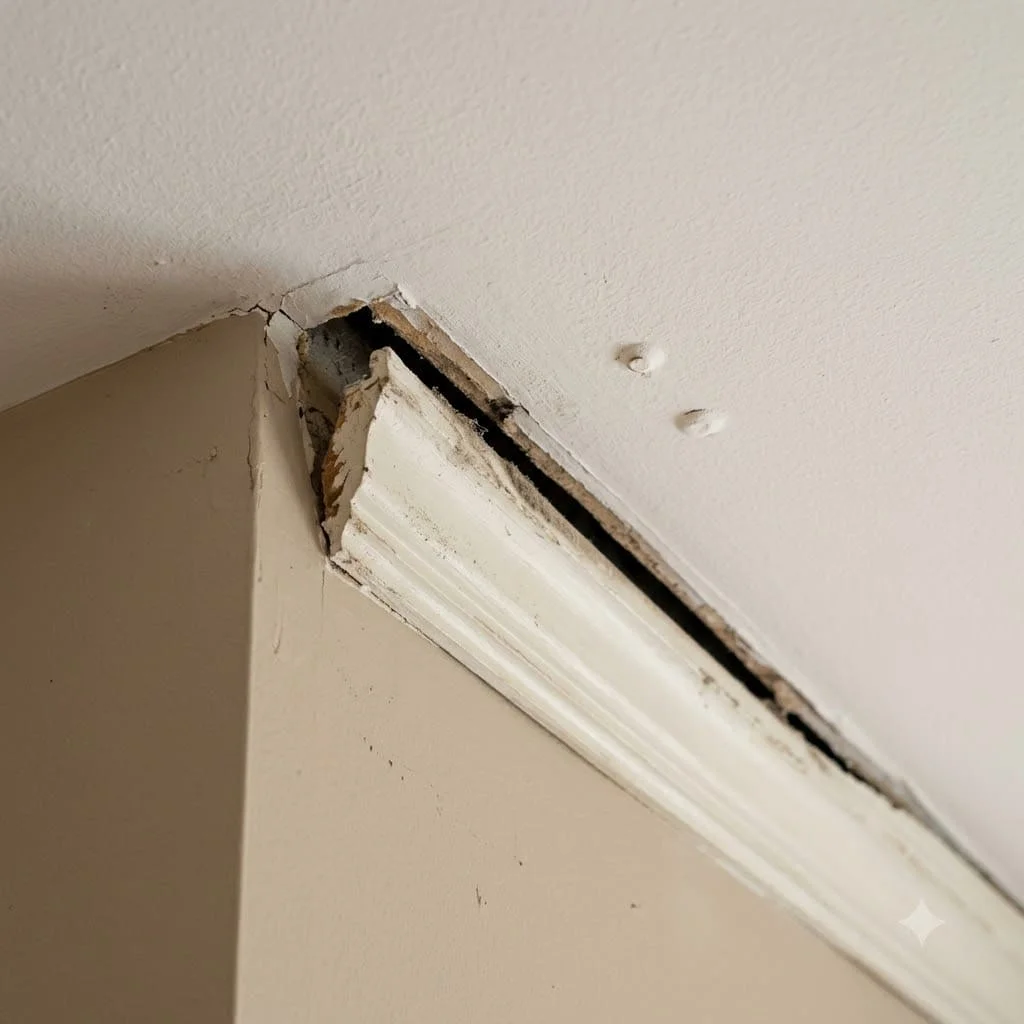
Crown molding or baseboards pulling away from the wall
A growing gap between crown molding and the ceiling, or between baseboard and the floor, means the wall and the floor or ceiling are no longer moving together. It shows up first at inside corners, where the two pieces of trim meet, before it becomes visible along a full wall.
Standing water or persistent dampness under a pier-and-beam crawl space
Water pooling under one section of a crawl space keeps the soil beneath those piers wetter — and therefore more expansive — than soil under the rest of the house. That uneven moisture is one of the more common reasons older pier-and-beam homes around Old Town Pflugerville develop a soft or bouncy spot in the floor above.
When it is more than cosmetic
A single hairline crack in a taping seam or one door that sticks every August is normal wear. What separates a cosmetic issue from a foundation issue is pattern: cracking and gaps clustered on one side of the house, doors and windows that stopped working around the same time, or a slope that a level or a marble test confirms. Cracks alone cannot answer that question — a foundation inspection that includes a floor elevation survey can, and it is the only way to know whether what is showing up on the walls matches actual movement in the slab. For the mechanics behind why this soil moves in the first place, see how clay soil causes foundation damage.
The same clay runs under Round Rock, Hutto, Manor, and north Austin, so homeowners in those areas tend to see the same handful of signs. If a few of these are showing up in a Pflugerville home, the next reasonable step is getting the floors measured rather than guessing from the cracks alone — see foundation repair options in Pflugerville or what a repair typically costs.
A closer look
What early cracking looks like up close.
A diagonal crack starting at a door corner and a door that no longer closes flush tend to show up together, because both come from the same racking of the frame above a settling slab.
Another common pattern
Molding gaps and nail pops rarely show up alone.
A widening gap between crown molding and the ceiling, paired with a few nail pops along the same wall, usually points to the same underlying movement rather than two separate problems.
Not sure which signs matter?
Describe what's showing up at your Pflugerville home and get a free, no-obligation foundation inspection with a floor elevation survey.