Home / Pier and Beam Foundation Repair
Crawl space foundations
Pier and Beam Foundation Repair in Pflugerville, TX
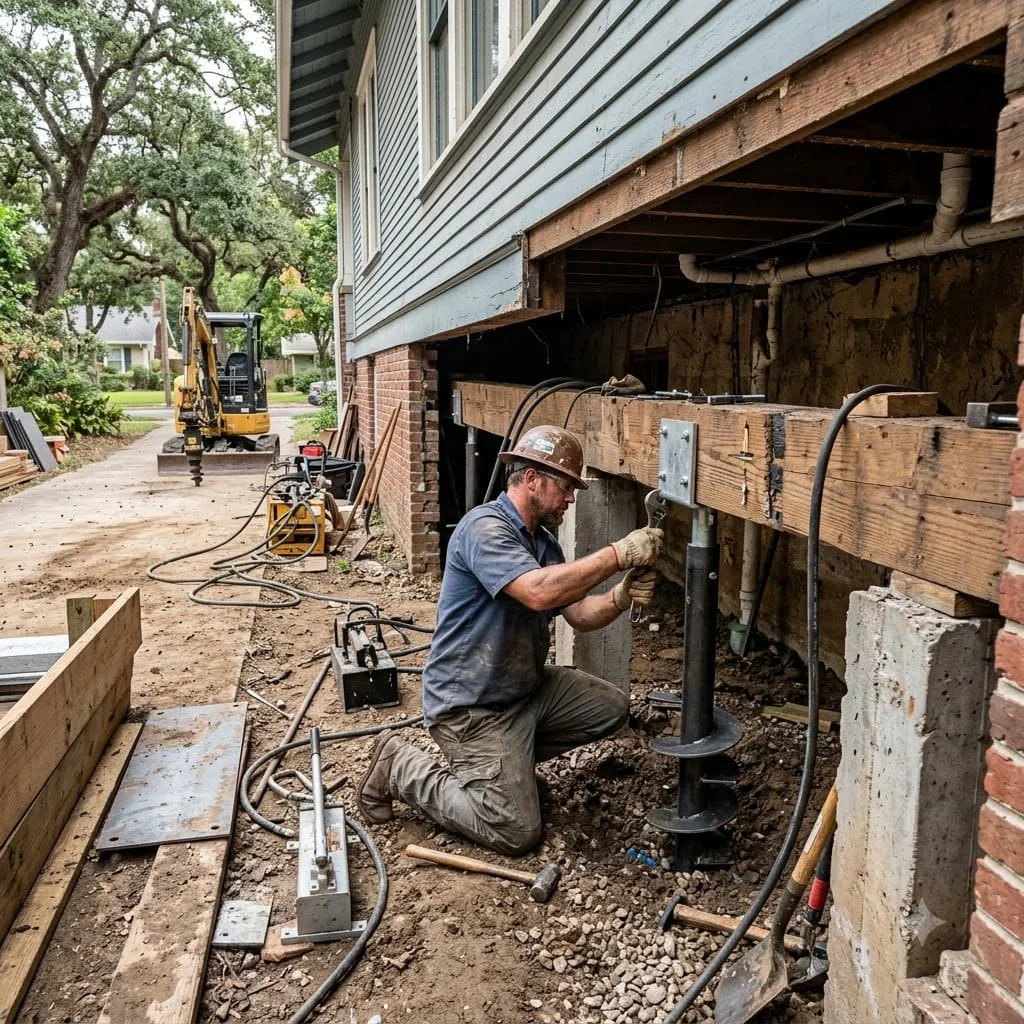
Older homes were built to be adjusted — that is the advantage of pier and beam. Sagging floors, crushed shims, and settled pads can be corrected from underneath without tearing up your house.
Overview
How pier and beam differs from a slab
A slab home rests directly on the ground. A pier and beam home sits above it, carried by a grid of piers that support wood girders, which in turn carry the floor joists. That gap underneath — the crawl space — is the whole difference. It gives the plumbing somewhere to run, it separates the wood from wet clay, and, most usefully, it means the house can be re-leveled by adjusting supports rather than lifting concrete.
In Pflugerville this construction shows up mostly on older properties: homes around Old Town, farmhouses on lots that predate the subdivisions, and some additions built onto houses that were otherwise slab. If your floors have a bit of spring to them and there is a vent or hatch along the exterior wall, this page is your foundation type.
The good news is that these foundations are forgiving. The same clay soil that cracks a slab tends to move a pier and beam house more gently, and when it does move, the repair is measured in shims and jacks rather than in excavation.
What goes wrong underneath
Almost everything we find in a Pflugerville crawl space traces back to one of two things: the soil moved under a pier, or moisture got into the wood. Often both.
- Pads settling into clay. Many interior piers were set on shallow pads poured directly on Blackland clay. When that clay shrinks through a drought summer, the pad drops and takes the floor above with it.
- Beams spanning too far. Girders sized for shorter spans than they actually carry will deflect. You feel it as a soft, bouncing floor in the middle of a room.
- Rot at the perimeter. Sill beams and joist ends sitting near damp ground eventually go soft. Poor drainage around the perimeter is the usual culprit, sometimes with old termite damage layered on top.
- Failed shims. Wood shims crush under load and dry out. Finding them scattered on the ground is a reliable sign the house has kept moving since the last adjustment.
- Standing water in the crawl. Water that collects under the house keeps the humidity high year-round, which is what makes wood problems inevitable rather than possible.
How the repair works
The sequence matters. Rotted or damaged wood gets replaced before any lifting happens, because you cannot jack against a beam that will not hold. Once the framing is sound, new piers with properly sized concrete pads go in wherever support is missing or spans are too long.
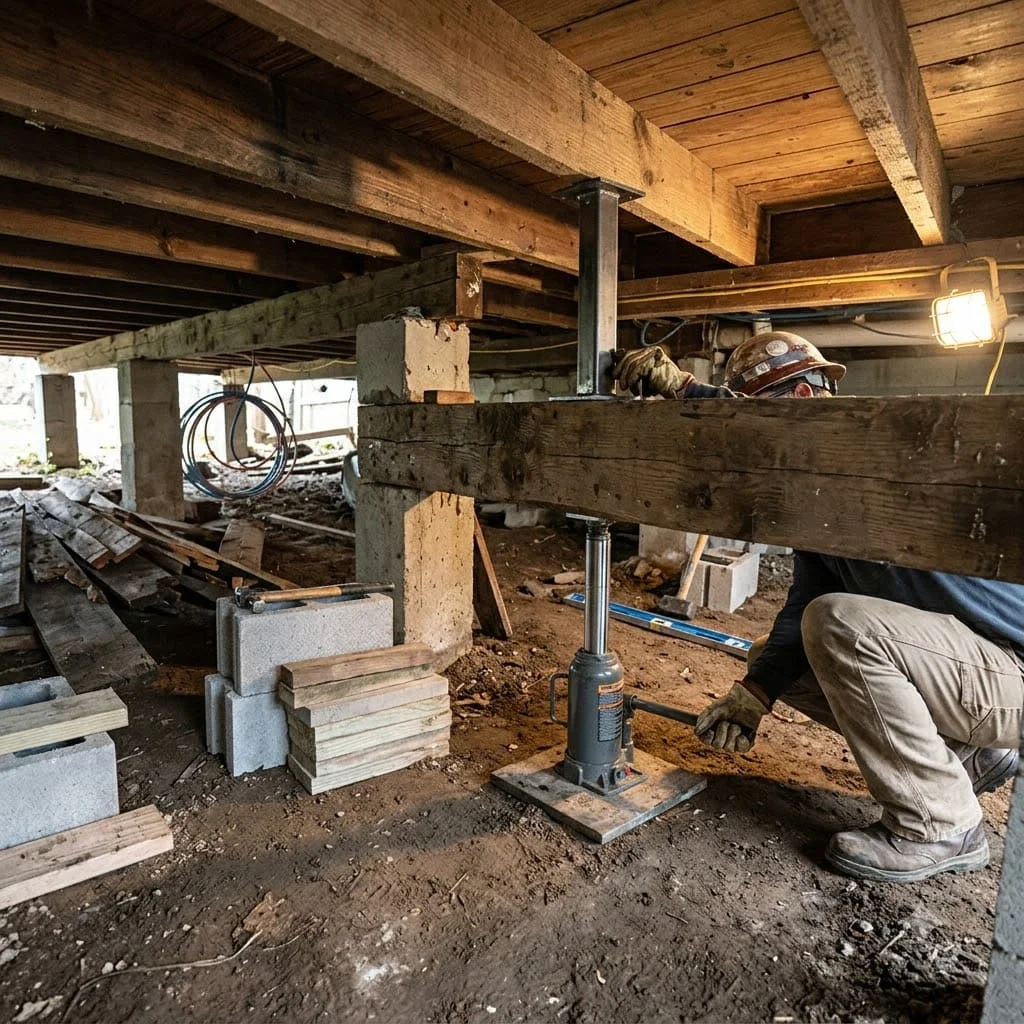
Then the lift itself: screw jacks are set and raised gradually across the low areas — slow enough that the framing, drywall, and trim above can adjust without cracking. When the elevations come in line, steel or hardwood shims lock the height in and the temporary jacks come out. Most of this work is invisible when it is finished, other than doors that close properly again and floors that stop sloping.
We handle the drainage side of it too, since a crawl space that stays dry is what keeps this repair from repeating. If you also have visible cracking in a masonry skirt or chimney, our foundation crack repair page covers which of those cracks are structural and which are not.
Common problems
What we find in most crawl spaces.
Four issues account for the large majority of pier and beam calls in this area. Each one has a different fix, and telling them apart requires getting under the house.
Sagging floors between piers
Original pier spacing on older homes is often too wide for the girder size, so the beam bows between supports. The floor dips in the middle of a room rather than at the wall — the classic pier and beam signature.
Settled or leaning pads
Interior piers frequently sit on shallow concrete pads poured straight onto clay. When that clay shrinks in a dry summer the pad tips or drops, and the post above it goes with it.
Rotted sill beams and joist ends
Where a crawl space stays damp, the wood closest to the ground goes first. Soft sill plates, crumbling joist ends over the perimeter beam, and old termite damage all have to be replaced before anything is leveled.
Shims that have crushed or fallen out
Wood shims dry, compress, and eventually work loose. A crawl space full of shims lying on the ground is a good clue that the last repair was cosmetic rather than structural.
Our process
How a crawl space repair runs.
Crawl the space
We go under the house with a light and look at every pier, beam, and joist end — checking for rot, insect damage, crushed shims, and pads that have tipped or sunk.
Map the elevations
A floor elevation survey inside the home shows exactly how far off level each room is, so the plan targets the actual low points instead of jacking wherever there is easy access.
Replace, then support
Any rotted beam or joist end is replaced first — there is no point lifting on wood that cannot carry the load. New interior piers get poured pads sized for the load above.
Lift slowly and lock it in
Screw jacks raise the structure gradually over the course of the day so the framing above can adjust, then the elevation is held with steel or hardwood shims and the jacks come out.
When to call
Signs your pier and beam home needs attention
- Floors that slope enough to notice, or that dip toward the center of a room.
- A soft, bouncing feel underfoot, or dishes rattling when someone walks past.
- Interior doors dragging on the jamb, or gaps opening at the top of a door frame.
- A musty smell from the crawl space, or visible standing water under the house.
- Soft, spongy wood at the sill beam that you can push a screwdriver into.
Any of these is worth a free look. Pier and beam problems are far cheaper to fix early, before a settling pier turns into a rotted beam. We work throughout Pflugerville and also take calls from Round Rock, Hutto, Manor, and Austin.
Pier and beam questions
Frequently Asked Questions
How do I know whether I have pier and beam or a slab?
Look for a crawl space vent along the exterior wall near ground level, or an access hatch in a closet floor or on the side of the house. Pier and beam floors also sound hollow underfoot and have a little give. In Pflugerville, most homes near Old Town and the older stretches off Pecan Street are pier and beam, while nearly everything built in the newer subdivisions is slab-on-grade.
Is pier and beam repair cheaper than slab repair?
Usually, yes. The crew works from the crawl space instead of excavating around the perimeter, and adjustments can be made without heavy equipment. Straightforward leveling and shimming often runs a few thousand dollars. Costs climb when rotted beams, damaged joists, or new interior piers are needed, since that is carpentry work on top of the leveling.
Why do my floors feel bouncy in the middle of the room?
That is almost always a support spacing issue rather than a foundation failure. Older homes were framed with smaller girders and piers set too far apart for the span. The beam flexes under load, and you feel it as bounce. Adding properly footed interior piers under the girder stiffens the floor immediately and permanently.
Does the crawl space need a vapor barrier?
It helps a great deal in this climate. Bare clay under a house releases moisture continuously, and that humidity is what rots sill beams and joist ends. A sealed plastic vapor barrier over the ground, along with clear vents and drainage that carries water away from the perimeter, keeps the wood dry so the leveling you paid for lasts.
How long does the work take?
Most pier and beam leveling in the Pflugerville area is finished in one to two days. Jobs that include replacing a sill beam, sistering joists, or pouring new interior pier pads take longer, generally three to five days, because concrete needs time to cure before it carries load. You can stay in the house throughout.
Sloping floors are fixable — usually in a day.
Free crawl space evaluation and elevation survey for Pflugerville homeowners, with a written price before anything starts.