Free Estimates · Serving Pflugerville & Surrounding Areas
The foundation repair team built for Pflugerville's black clay soil.
Cracks over the doors, a garage corner pulling away, tile splitting down the hallway — in this part of Central Texas that is almost always the ground moving, not the house failing. We measure it, explain it in plain English, and fix it right.
Free on-site evaluations with a full floor elevation survey — no obligation.
What we do
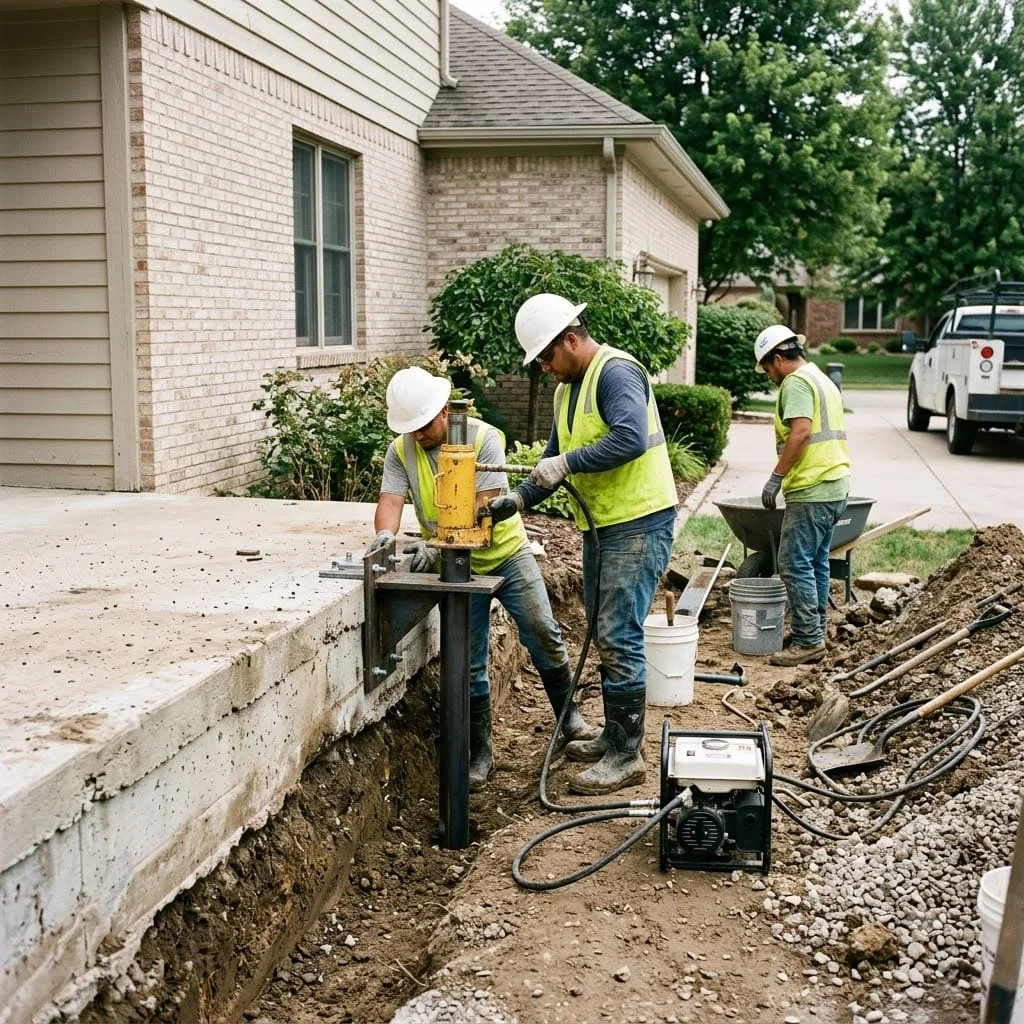
Foundation repair for slab and pier and beam homes.
Whether your house was framed in the 1950s near Pecan Street or finished last decade in Falcon Pointe, the soil underneath is the same problem — it just shows up differently. Every service below starts with the same free measurement so the repair matches what is actually happening under your floor.
Slab Foundation Repair
Pressed concrete, steel, and drilled piers that lift and stabilize slab-on-grade homes moving on Blackland Prairie clay.
Learn more →Pier and Beam Foundation Repair
Shimming, beam and joist replacement, and new interior piers for older crawl space homes around Old Town Pflugerville.
Learn more →House Leveling
Sloping floors, doors that swing open on their own, cracked tile — leveling brings the structure back toward its original elevation.
Learn more →Foundation Inspection
A free on-site evaluation with a floor elevation survey, so you know whether you have a real problem or a cosmetic one.
Learn more →Concrete Leveling
Sunken driveways, patios, sidewalks, and garage floors lifted back into place with mudjacking or polyurethane foam.
Learn more →Foundation Crack Repair
Epoxy and polyurethane injection, carbon fiber reinforcement, and honest answers about which cracks actually matter.
Learn more →The local problem
Why Pflugerville foundations move in the first place.
Pflugerville sits on the western edge of the Blackland Prairie, and the soil under most of this town is a dark, dense clay that behaves less like dirt and more like a sponge. Soak it and it swells. Dry it out and it shrinks and cracks — you have seen the fissures open across bare yards by late August.
That cycle is the whole story. A slab poured on clay with a high plasticity index rides up and down with the moisture in the soil beneath it. The perimeter dries fastest because it is exposed to sun and wind, so edges tend to drop first, which is exactly why garage corners and front door frames are usually the first places a homeowner notices something is wrong.
Drought years hit hardest. The long dry stretches of 2011, 2022, and 2023 pulled enormous amounts of water out of Central Texas clay, and a lot of homes that had been quiet for twenty years suddenly opened up cracks. Mature live oaks and cedar elms make it worse — a big tree can draw hundreds of gallons a day out of the soil right next to your slab.
Add in plumbing leaks under the slab, gutters that dump water in one spot, and a lot on a grade that runs toward the house instead of away from it, and you have the four causes behind nearly every foundation problem we look at in this area.
Know what to look for
Six signs your foundation is telling you something.
One of these on its own may be nothing. Two or three together, especially if they are getting worse season over season, are worth a free look.
Diagonal cracks at door and window corners
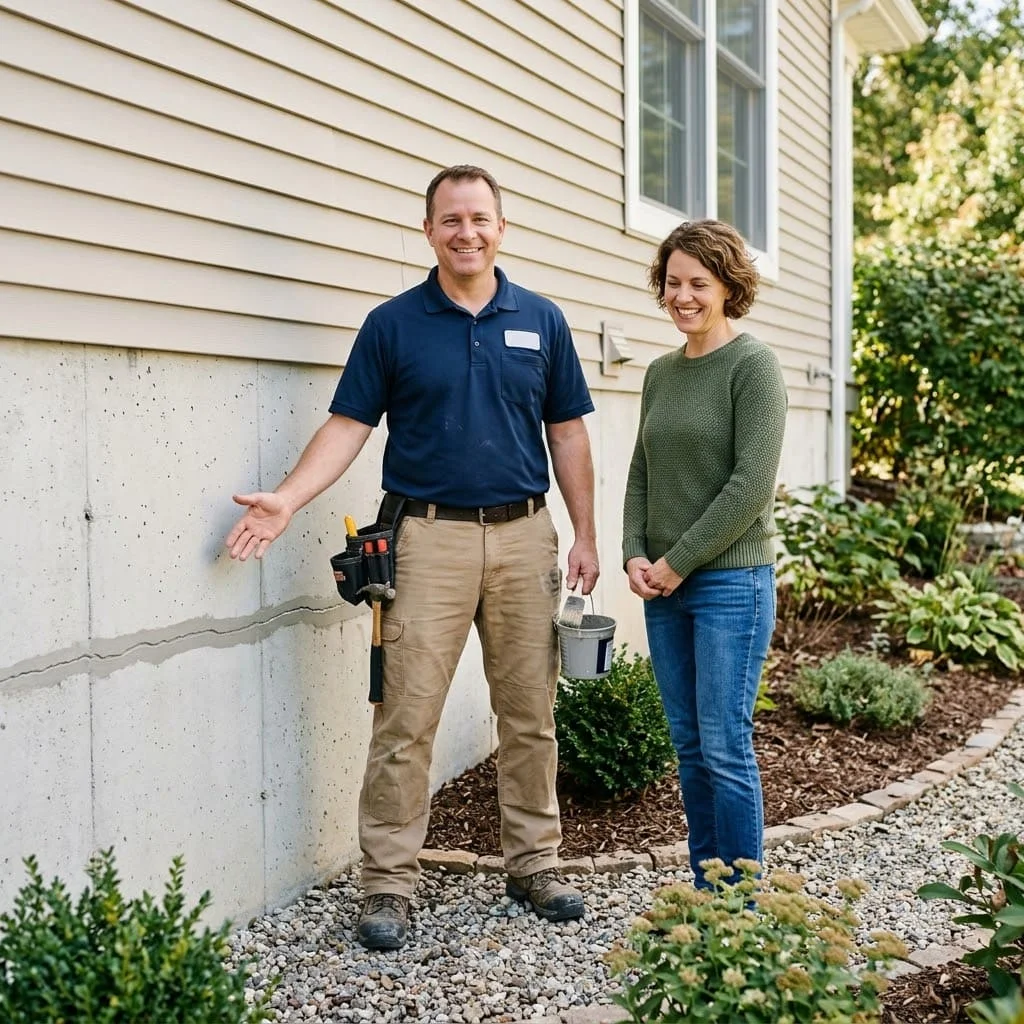
Sheetrock cracks that run at roughly 45 degrees from the corner of a door frame or window are the classic sign of differential movement — one part of the slab has dropped or lifted relative to another.
Doors that stick, drag, or swing on their own
When a door that used to close cleanly now catches at the top corner, or an interior door drifts open by itself, the frame is out of square because the floor underneath it moved.
Stair-step cracks in the brick veneer
Exterior mortar joints that crack in a staircase pattern — usually near a corner or above the garage opening — mean the slab edge has settled and the brick is being pulled apart at its weakest line.
Gaps between the ceiling, crown, and baseboards
Trim separating from the wall or ceiling shows the structure is being stretched. A gap you can slide a coin into is worth an evaluation before it grows through another dry summer.
Cracked floor tile in a straight run
A single chipped tile is an accident. Tile and grout cracking in a continuous line across a room is the slab flexing underneath the mortar bed.
Floors that feel sloped or bouncy
Marbles that roll one direction, or a kitchen island that suddenly seems out of level, point to elevation change. In pier and beam homes it usually feels more like a soft, springy floor.
Not sure what you are looking at? A free foundation inspection settles it with actual measurements instead of guesswork.
How it works
From your first call to the final walk-through.
Call and describe it
Tell us what you are seeing — the cracks, the doors, when it started. Photos help but are not required. You will get an honest read over the phone.
Free on-site evaluation
We measure floor elevations across the whole home, check drainage and grade, and look at the cracks from both inside and outside before saying a word about repair.
A written plan and price
You get a drawing showing where each pier goes, how much lift is realistic, what it costs, and how long it takes — in plain language, with no obligation.
The work, then the walk-through
Most pier jobs here run one to three days. We backfill, replace the sod or concrete we removed, and walk the finished elevations with you.
Straight answers on price
What foundation repair actually costs around here.
Nobody enjoys the runaround on price. Most residential foundation repairs in this area fall between roughly $3,500 and $14,000, and the number comes down to two things: how many piers your home needs, and which type of pier the soil and access call for.
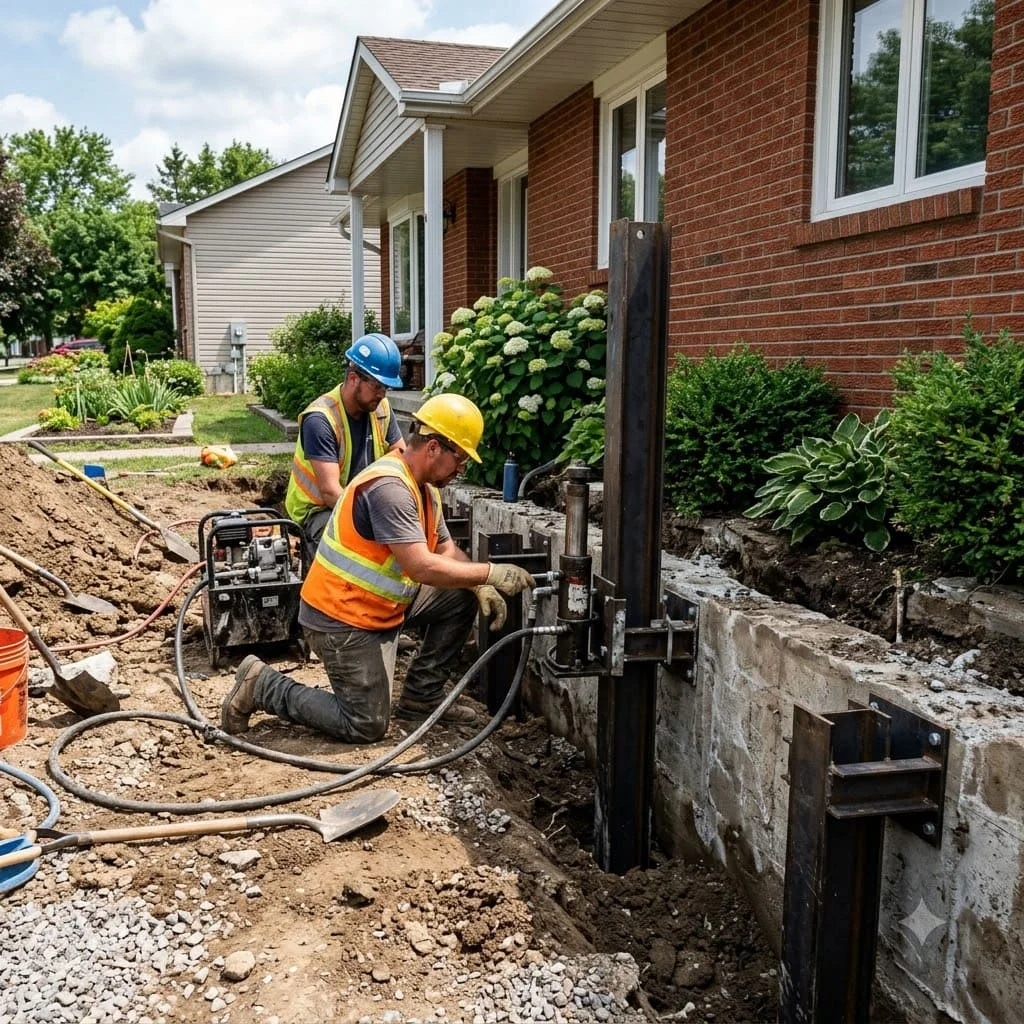
A single settled corner might need five or six piers. A house with movement along two full sides can need twenty or more. Pressed concrete pilings cost less per pier than steel; interior piers cost more than exterior ones because the crew has to open the slab inside the house and close it back up.
We publish the ranges instead of hiding them, then give you a fixed written number after the measurements — never a per-hour surprise at the end.
Where we work
Local to Pflugerville, and close enough to stay that way.
We keep the service radius tight on purpose. The soil, the builders, and the subdivision ages here are things you learn by working the same ground over and over. Along with every neighborhood in town, we take calls from Round Rock, Hutto, Manor, and north Austin.
- Old Town Pflugerville
- Falcon Pointe
- Blackhawk
- Highland Park
- Avalon
- Springbrook
- Heatherwilde
- Villages of Hidden Lake
- Commons at Rowe Lane
- Sorento
- Bohls Place
- Windermere
- Steeds Crossing
- Cambridge Estates
- Lake Pflugerville
- Stone Hill
Common questions
Foundation Questions We Hear Most
Why do so many Pflugerville homes have foundation problems?
This town sits on the Blackland Prairie, where the dominant soil is a dark, highly expansive clay. That clay swells when it takes on water and shrinks when it dries out, and the difference between a wet spring and a drought summer here can move the ground several inches. A concrete slab poured on top of soil that moves that much will eventually move with it. It is a soil problem far more often than a construction problem.
How much does foundation repair cost in Pflugerville?
Most residential jobs around here land between about $3,500 and $14,000, depending on how many piers the home needs and what type. A corner or one exterior wall might take five or six piers; a whole-house lift can take twenty or more. Crack-only repairs are far less. Our foundation repair cost guide breaks down the per-pier ranges and the factors that move the number up or down.
How long does foundation repair take?
A typical exterior pier job on a slab home takes one to three working days from the first shovel to the final backfill. Interior piers, which require breaking through the slab inside the house, add a day or two. Pier and beam leveling is often finished in a single day since the crew works from the crawl space. You do not need to move out for any of it.
Do you charge for an estimate?
No. The on-site evaluation and written estimate are free for homeowners in this area, and there is no obligation to move forward. If the measurements show your home is within normal tolerance and does not need repair, we will tell you that — a lot of the cracks we get called out for turn out to be cosmetic.
Will foundation repair fix the cracks in my walls?
Lifting the foundation closes most cracks substantially, but the sheetrock, tape, and paint still need cosmetic repair afterward, and brick mortar joints usually need tuckpointing. We are straight with homeowners about this up front: the structural work is what stops the movement, and the patch-and-paint is a separate finishing step that some people handle themselves.
Get a free estimate before the next dry spell.
Foundation movement rarely fixes itself, and the cheapest version of this job is always the one you catch early. Call and get a real answer today.